

Category
Date Posted
April 8, 2026
No Comments
Winter is ending in the Capital Region. Tulip bulbs are beginning to awaken from their long winter's nap, and while we'll be exchanging our heavy parkas for lighter weight hoodies it appears a number of Albany area homeowners have discovered an unwelcome souvenir of winter -- a large, brownish, or "tea" colored stain spreading across the ceiling of their living rooms.
If during the past couple of months you watched as giant icicles began forming like spears from under your eaves, you weren't viewing a winter wonderland. Instead, you were likely watching a slow motion assault upon the structural integrity of your home. These icicles represent the primary symptom of ice dams, which plague our regional housing stock from Pine Hills to Melrose.
The Anatomy of an Albany Ice Dam
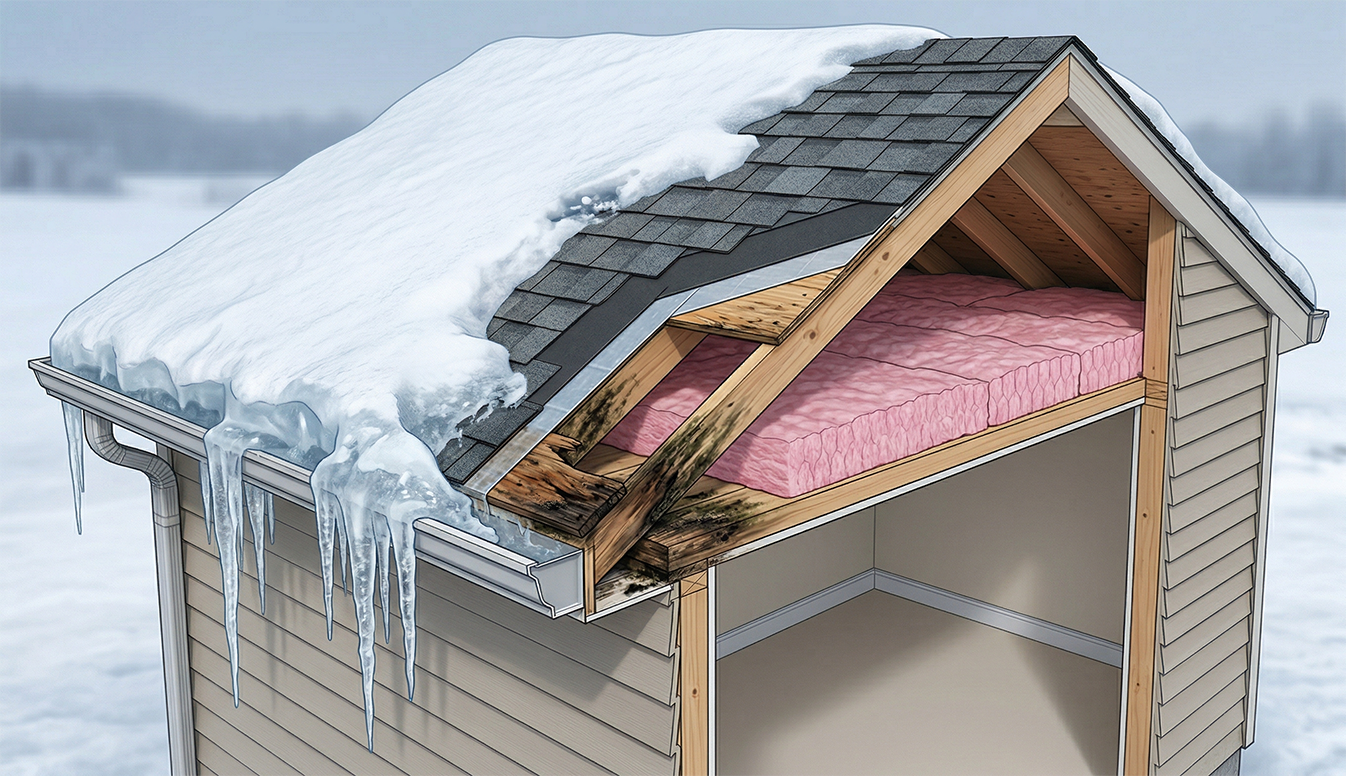
A problem with an ice dam does not begin on the surface of your roof, but rather within your attic. Ice dams develop as heat leaks out of your home into the attic area which then warms up your roof decking. That warm roofing material will cause the bottom layer of snow to thaw. Once this thaws, the water will run downhill along your roof until it reaches what is called the "eave," (the lower edge of your roof that extends beyond your house's walls).
Since there are no heated spaces below your eave areas, your eave areas continue to be at or near the temperature of melting ice. When the water drips off your eave area and onto the colder surface, it immediately freezes back to form a solid sheet of ice. Over time, a large pool of water develops above these ice sheets. Because the water has no place to drain, it seeps up through your shingles and drips right into your ceiling insulation and your walls and finally ends up on you favorite chair.
We're Available
Call Us For a Quote
Get in touch with our team today for a transparent, no-pressure quote tailored to your home’s specific needs.
Why Our Neighborhoods are Ground Zero
Albany is known for its architectural history, however, the historical victorian and craftsman style bungalows were built with little consideration for modern r-value insulation. A large portion of the homes within this area (Center Square) have what can be referred to as 'hot' roofs, either due to inadequate ventilation in the attic space or poor settling of insulation over time.
The issue of building design is compounded in tight neighborhood areas such as Center Square due to multiple angles on each home which creates many "valleys" where snow will accumulate. The extreme weather conditions experienced during both February and March of 2026 provided the optimal condition to allow the dams of ice to form, when combined with the extreme temperatures from the January snow event.
The Damage You See (and the Damage You Don’t)
Ice dams are typically easy to identify with a "leak in the living room", however the damage caused by this issue is usually much greater than what you see. Water will travel behind your shingles into your attic space causing damage to your attic insulation. After your fiberglass insulation becomes saturated with water, it no longer holds heat; increasing the amount of money you spend on heating your home, while also warming your roof which will create additional issues in creating more ice dams.
In addition to damaging your attic insulation (fiberglass) that has been exposed to excessive moisture will lead to the development of mold and wood rot within your rafters. By the time you notice paint pealing off walls, or water leaking from a light fixture, it is highly probable that the water had already traveled at least several feet internally through your homes internal structure. If you fail to address these signs of damage in the Albany area, they may have significant negative impacts on the resale value of your home. Local savvy inspectors who understand how homes work, know exactly where to look for "ice dam" scarring on houses."
The issue of building design is compounded in tight neighborhood areas such as Center Square due to multiple angles on each home which creates many "valleys" where snow will accumulate. The extreme weather conditions experienced during both February and March of 2026 provided the optimal condition to allow the dams of ice to form, when combined with the extreme temperatures from the January snow event.
Breaking the Cycle: Prevention and Cure
If you're seeing a drip coming out right now, the quick fix is using a roof rake to gently clear the snow off the edge of the roof or by putting calcium chloride "socks" in front of the channel to break down the ice. However, don't climb onto that ladder to start whacking away at that ice with a hammer because you'll end up doing much more damage to those shingles than that ice will.
For homeowners in Albany, the long-term answer to their problem is two-fold: insulation and ventilation. To make a "cold roof," you need to match the outside temperature of the roof deck to the inside temperature. You can accomplish this by stopping "bypass" leaks which allow warm air to escape (such as around chimneys or recessed lighting) and adding enough attic insulation so it meets 2026 energy code requirements. As long as your attic remains cold, then your snow will remain frozen, there won't be any dripping water and your living space will remain dry.
In addition to damaging your attic insulation (fiberglass) that has been exposed to excessive moisture will lead to the development of mold and wood rot within your rafters. By the time you notice paint pealing off walls, or water leaking from a light fixture, it is highly probable that the water had already traveled at least several feet internally through your homes internal structure. If you fail to address these signs of damage in the Albany area, they may have significant negative impacts on the resale value of your home. Local savvy inspectors who understand how homes work, know exactly where to look for "ice dam" scarring on houses."
The issue of building design is compounded in tight neighborhood areas such as Center Square due to multiple angles on each home which creates many "valleys" where snow will accumulate. The extreme weather conditions experienced during both February and March of 2026 provided the optimal condition to allow the dams of ice to form, when combined with the extreme temperatures from the January snow event.